


If you have started researching hair restoration in Roseville, you have probably met more acronyms than answers: PRP, PRF, PDRN, exosomes. They all promise to wake up thinning hair follicles, and they all lean on the words "growth factors" and "regenerative." They are not the same treatment, and the right one depends on how advanced your thinning is, what you want to achieve, and how your body responds.
This post explains what each treatment is, how they differ, and how to think about which one fits your situation. At Lotus MD, Dr. Sanghera evaluates each patient before recommending a hair restoration plan, because a treatment that works well for early thinning is not always right for more advanced hair loss.
What causes hair thinning?
Most non-scarring hair loss, including androgenetic alopecia (male and female pattern hair loss), happens gradually. Hair follicles miniaturize, the growth phase of the hair cycle gets shorter, and the strands come in thinner and shorter over time. Genetics, hormones, stress and reduced blood supply to the scalp all play a part.
Regenerative treatments do not work like a hair transplant, which physically moves follicles. They aim to improve the environment around existing follicles (blood supply, inflammation and cell signaling) so that follicles that are still alive but underperforming become more active again. That distinction matters: these treatments generally work best on follicles that are miniaturized, not follicles that are gone.
PRP: platelet-rich plasma
PRP is the most established of these treatments. It starts with a standard blood draw. The blood is spun in a centrifuge at high speed, which separates a concentrated layer of platelets, the part of the blood richest in growth factors involved in healing and tissue repair. That platelet-rich layer is then injected into the areas of thinning.
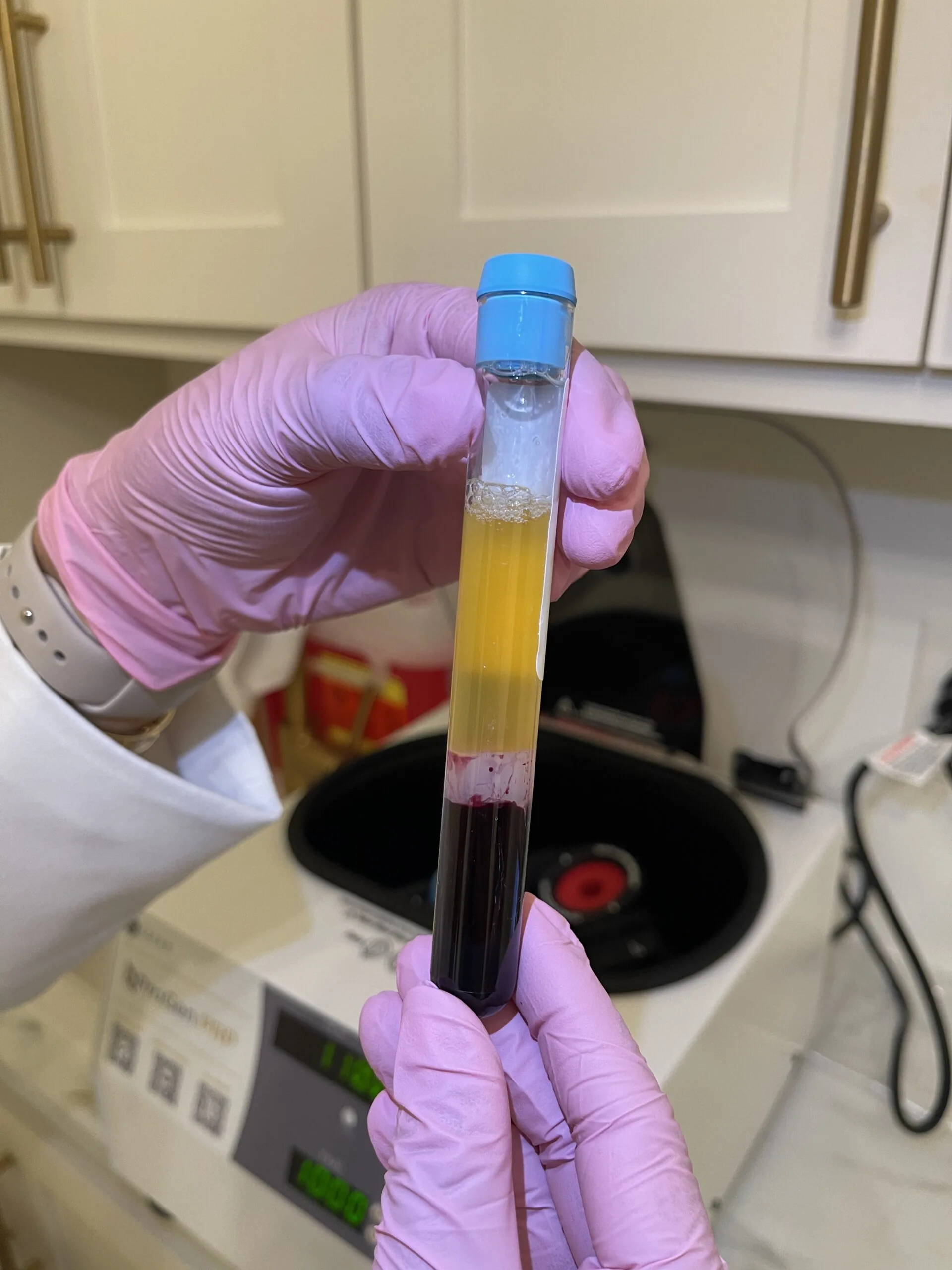
Because PRP is prepared with an anticoagulant to keep it liquid, its growth factors are released quickly after injection, often within hours. That fast release can improve hair thickness and density over a course of treatment, but the effect does not linger long at the cellular level. That is why PRP plans usually start with a series of monthly sessions followed by periodic maintenance visits.
Best suited for: early-stage thinning, where follicles are still active and responsive.
PRF: platelet-rich fibrin
PRF is often described as the next generation of PRP, and the difference is in how the blood is processed. PRF is spun at a lower speed and prepared without an anticoagulant. That gentler process keeps more of the blood's healing components, including white blood cells, and lets the sample form a fibrin matrix: a natural, web-like scaffold.
The fibrin matrix acts as a slow-release system, delivering growth factors to the scalp gradually over several weeks rather than hours. In practice that can mean a more sustained effect from each session.
Best suited for: early to moderate thinning, for patients who want a more sustained effect between sessions.
PDRN: polydeoxyribonucleotide
PDRN takes a different approach. It is not made from your own blood. It is a purified DNA fragment, most often sourced from salmon, that works mainly by activating a cellular pathway (the adenosine A2A receptor) that supports new blood vessel formation and reduces local inflammation.
For the scalp, that means better blood supply reaching the follicle, which matters because a miniaturizing follicle is partly a poorly nourished one. PDRN results tend to be gradual and cumulative, built over a course of sessions, and it is often used alongside other regenerative treatments rather than on its own.
Best suited for: supporting scalp health and blood supply as part of a broader plan.
Exosomes: cell-derived signaling
Exosomes are the newest and most talked-about option in this category. Unlike PRP and PRF, they are not made from your own blood. They are tiny extracellular vesicles derived from stem cells that work as cellular messengers, carrying proteins, growth factors and signaling molecules. On the scalp they are often paired with microneedling to improve absorption.
Exosomes are a newer category, and the research base is still small compared with PRP's long record of clinical use. Early evidence is promising, particularly as a complement to other treatments, but the evidence is still developing and it is worth being upfront about that.
Best suited for: patients looking for an option not made from their own blood, usually as part of a combination plan.
How the treatments compare
| Treatment | Source | Growth factor release | Typical plan |
|---|---|---|---|
| PRP | Your own blood (platelets) | Fast, within hours | Initial series, then periodic maintenance |
| PRF | Your own blood (platelets and a fibrin matrix) | Slow, over weeks | Initial series, sometimes fewer maintenance visits |
| PDRN | Purified, salmon-derived DNA | Gradual and cumulative | A course of sessions |
| Exosomes | Stem cell-derived vesicles | Signaling-based, gradual | Varies, often combined with other treatments |
Which treatment is right for you?
That is the question an evaluation is meant to answer, and it depends on more than one factor.
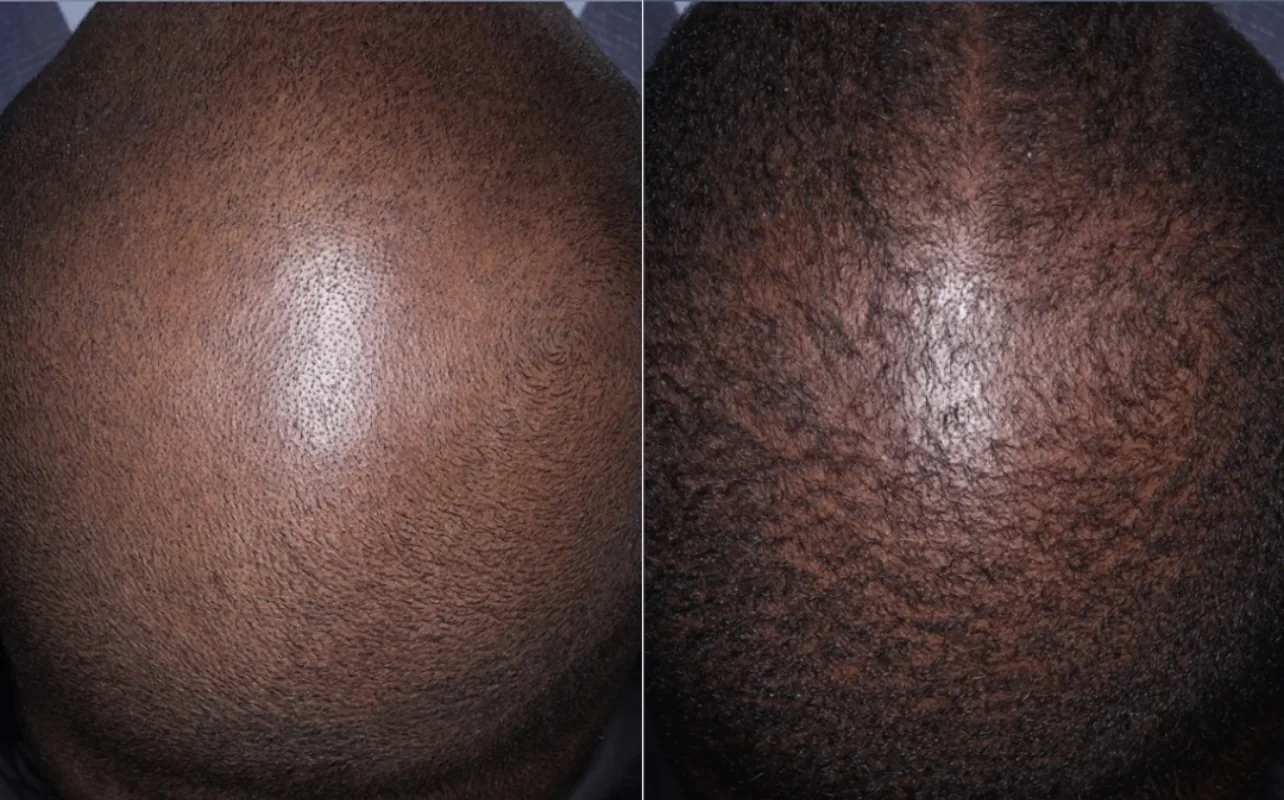
- Stage of hair loss. Early, diffuse thinning responds differently from more advanced miniaturization, and a plan should reflect where you are, not a generic protocol.
- Male or female pattern hair loss. The hormonal and genetic drivers differ, which affects how a plan is built and what results are realistic.
- Your goals and timeline. Some patients want the fastest visible change and are happy with more frequent sessions. Others prefer a slower approach with fewer visits.
- Whether you are a candidate. Regenerative treatments work on follicles that are miniaturized but still viable. A scalp exam shows whether that is the case where you are thinning.
At Lotus MD, hair restoration starts with PRP hair restoration, evaluated and given under Dr. Sanghera's direct care. At your consultation she assesses your scalp, discusses your history and goals, and builds a plan around what suits your stage of hair loss.
Frequently asked questions
What is the main difference between PRP and PRF for hair restoration?
Both use your own blood, but they are processed differently. PRP is spun at high speed with an anticoagulant and releases its growth factors quickly. PRF is spun more gently without an anticoagulant, forming a fibrin matrix that releases growth factors gradually over several weeks.
Is PDRN the same thing as PRP?
No. PRP comes from your own blood. PDRN is a purified DNA-based compound, most often sourced from salmon, that works through a different pathway focused on blood supply and tissue repair.
Are exosomes safe for hair restoration?
Exosome treatment is a newer category with a growing but still developing body of research, compared with PRP's longer clinical record. As with any treatment, whether it suits you and how safe it is for you should be discussed directly with a physician.
Does this work for female pattern hair loss, not just male pattern baldness?
Regenerative treatments are used for both male and female pattern hair loss. The right plan depends on your pattern of thinning, which is assessed at your consultation.
How many sessions will I need?
It varies by treatment and by person. PRP usually involves an initial series of sessions spaced several weeks apart, followed by maintenance visits. Dr. Sanghera will outline an expected timeline after your evaluation.
How do I get started?
Book a consultation at our Sacramento or Granite Bay office, where Dr. Sanghera will examine your scalp and hair loss pattern and recommend a plan. You can read more on our PRP hair restoration page, book an appointment or call (916) 249-7903.
This article is for information only and is not medical advice. Whether PRP, PRF, PDRN or exosome-based treatments suit you should be decided at a physician evaluation. Results vary from person to person.