

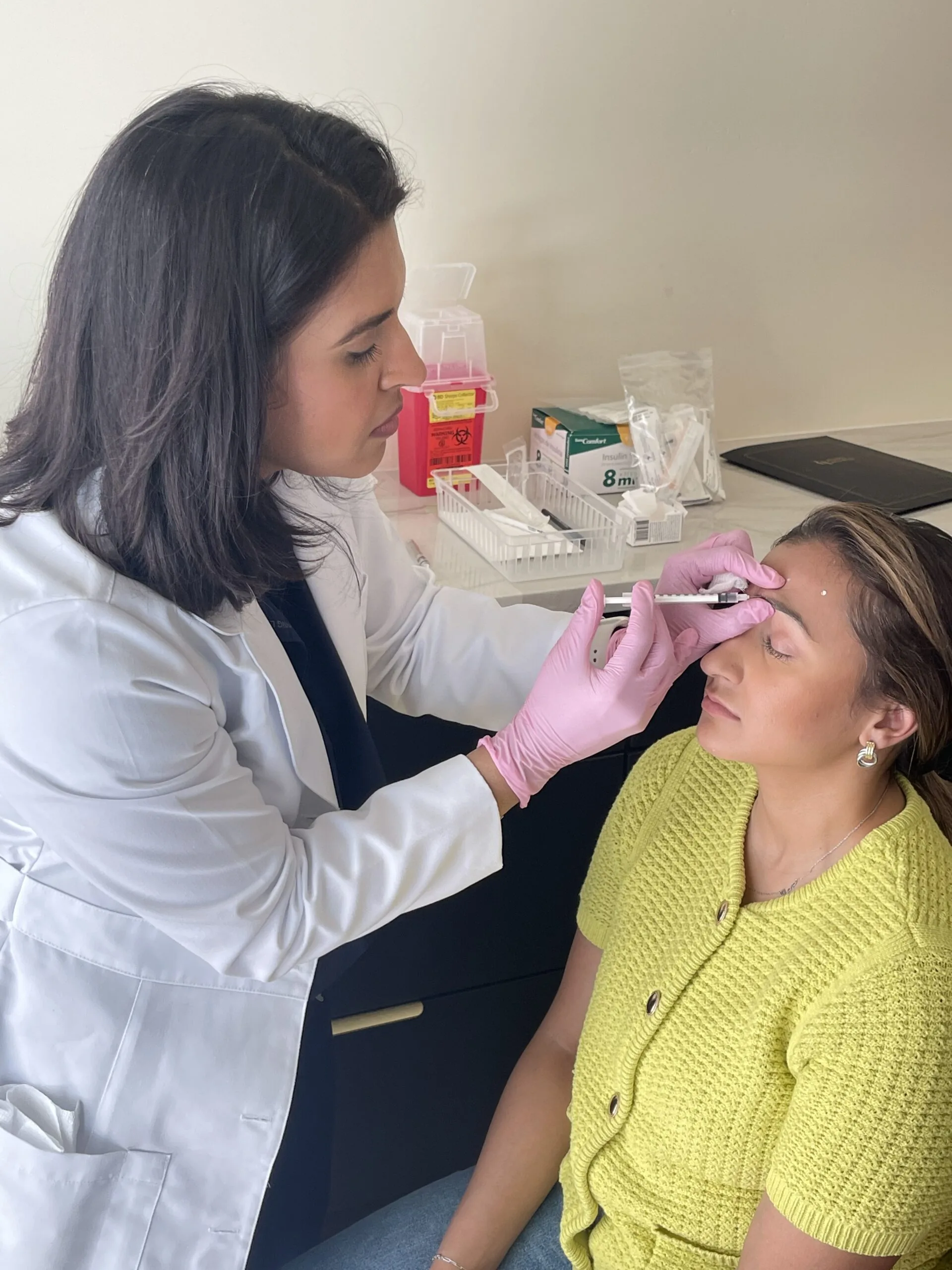
For most people, Botox lasts about three to four months. How long it lasts for you depends on your muscles, your metabolism, the dose, the injector's technique and how you care for your skin. Here is what to expect from day one, what affects how long results last, and how to plan your maintenance.
Botox results timeline: what to expect day by day
Days 1 to 2: settling in
In the first 24 to 48 hours, Botox is still binding to the nerve endings in the treated muscles. You may notice:
- mild redness or small bumps where the needle went in
- light tenderness or a faint feeling of tightness
- slight swelling that settles within a few hours
Visible change is usually minimal at this stage, and most people go straight back to normal activities.
Days 3 to 5: lines begin to soften
As Botox starts to work, early changes appear. Fine lines around the eyes, on the forehead or between the brows begin to soften, and you may feel the treated muscles contracting less.
Days 7 to 10: most of the change
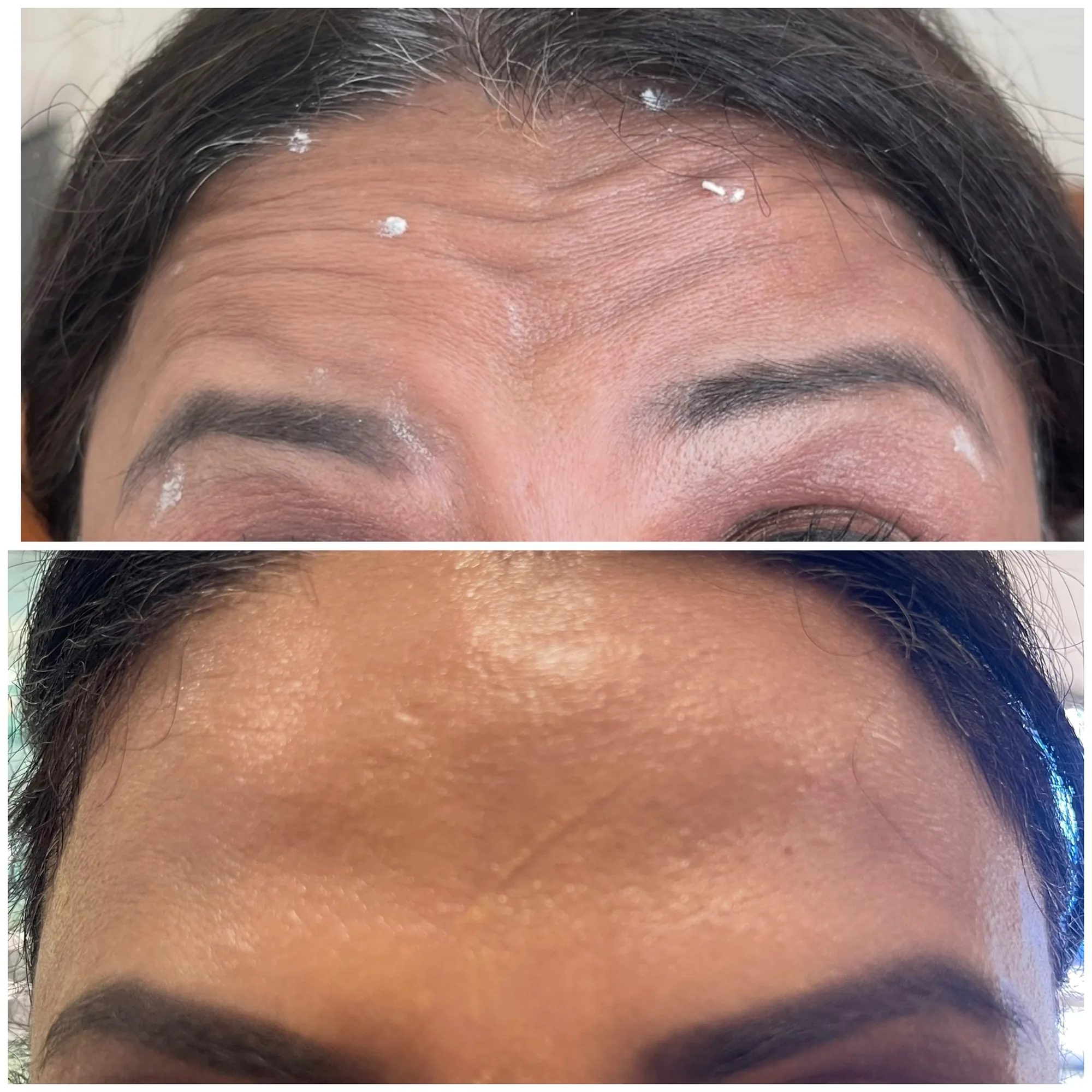
This is when most of the change shows. Expression lines smooth out and the skin looks more relaxed and refreshed.
Week 2: final results
By two weeks, Botox has fully settled and your final result is visible. Any slight unevenness in the first few days usually evens out by now. If an adjustment is needed, your provider will usually assess it at a follow-up visit.
Why results appear gradually
Botox takes time to attach to the nerve endings and block the signals that make muscles contract. As the muscles respond, the skin above them relaxes and lines soften. That gradual change is part of why a good result looks natural.
Follow-up appointments
Many medical practices book a follow-up 10 to 14 days after treatment to check your result, make sure the muscles have relaxed evenly, and make small touch-ups if needed.
How long Botox lasts for most people
Typical duration: three to four months
For most people, Botox lasts around three to four months. During that time the treated muscles stay relaxed, which keeps deep creases from forming and the skin looking smoother.
Some people get five to six months
Some people find their results last longer, sometimes up to five or six months. That is more common in people who:
- have had consistent treatments over time
- have naturally weaker facial muscles
- follow aftercare instructions closely
- have a slower metabolism
First treatments may wear off sooner
If you are new to Botox, your first treatment may fade a little faster. Untreated muscles are often stronger, and with repeat sessions the muscles tend to contract less forcefully.
Different areas, different timelines
Results can last a different length of time in different areas, depending on the size and strength of the muscle. Your provider will tell you what to expect for the areas you treat.
Muscle strength and expression habits
Your muscles and your habits have a large effect. Results may be shorter with:
- strong, very active facial muscles
- frequent frowning, squinting or eyebrow-raising
- intense workouts or a very active lifestyle
- a fast metabolism
Factors that influence how long Botox lasts
Skin elasticity
People with good skin elasticity often see the smoothing effect hold well, because their skin rebounds easily. Where lines are deeper and collagen has thinned, some lines may stay visible even when the muscle is relaxed.
Muscle strength
Stronger, heavily used muscles, such as prominent frown muscles or a busy forehead, tend to work through Botox faster. Weaker or less active muscles may stay relaxed for longer.
The product
Botox Cosmetic, Dysport and Xeomin are FDA-approved neuromodulators that differ slightly in formulation and spread. An injector chooses a product based on the treatment area, the precision needed, muscle strength and depth, and your history with neuromodulators.
Lifestyle
Some habits can shorten results or undo some of their benefit:
- High-intensity exercise. Athletes and people who train hard may notice results wearing off sooner.
- Smoking. Smoking speeds up collagen breakdown and harms skin health, which works against your result.
- Sun exposure and tanning. UV damage speeds up skin aging and deepens lines.
Healthy habits generally help results last.
Injector technique and dose
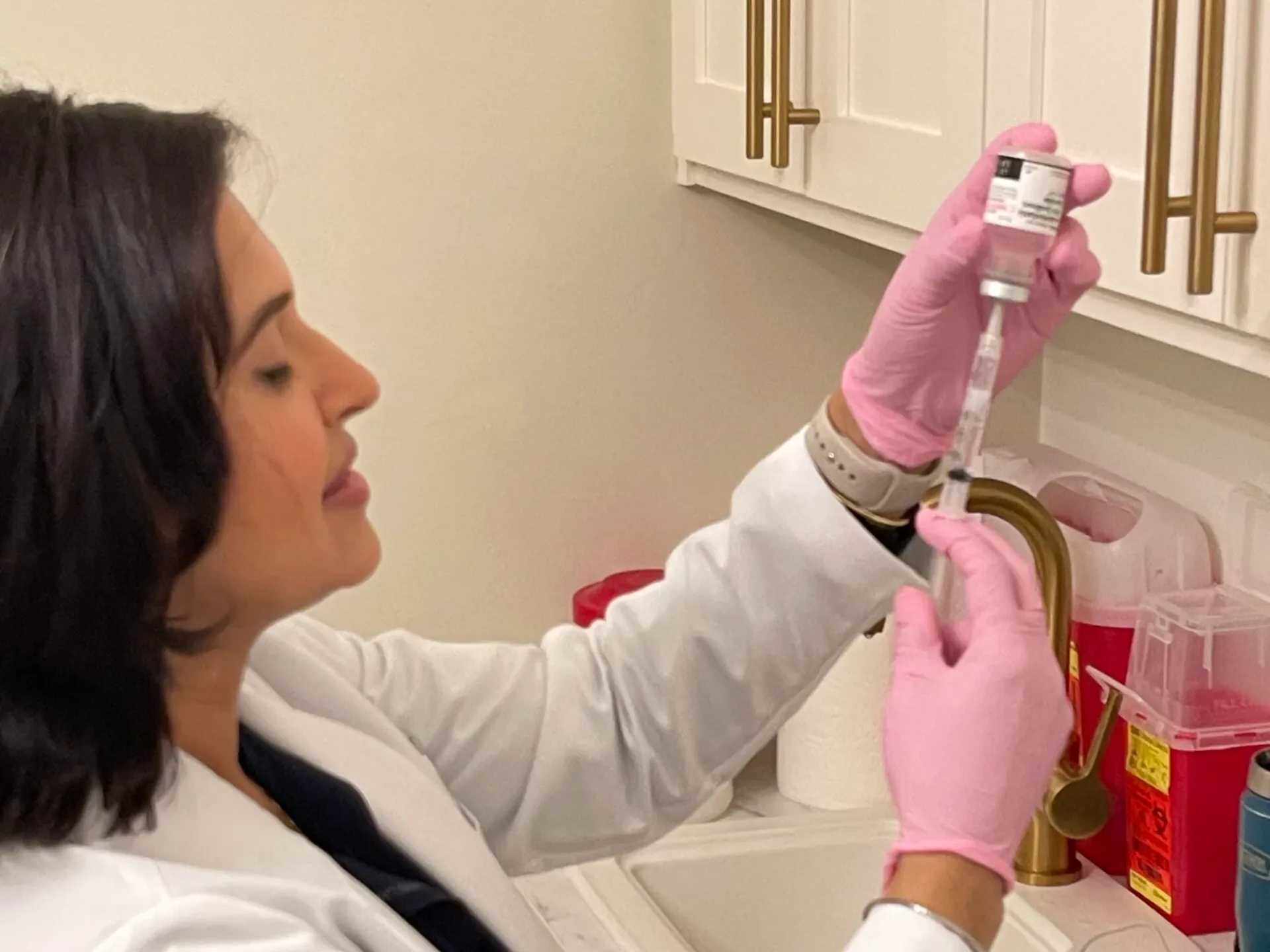
The injector's skill is one of the biggest factors. Small details matter: correct placement in the muscle, a dose matched to muscle strength, even distribution, and an understanding of facial anatomy and symmetry.
Why medical supervision matters
In California, Botox is a prescription medication and must be given by licensed medical professionals. A good practice will assess your facial anatomy properly, dose accurately, use safe and sterile technique, and book follow-ups to check your result.
How to make your Botox results last longer
Book maintenance before full movement returns
One of the best ways to extend your results is to book your next treatment before full movement has returned. Most people benefit from treatment every three to four months, and a consistent schedule helps the muscles stay relaxed, which can gradually lengthen how long each session lasts.
Support your skin with medical-grade skincare
Good skincare helps your skin look its best between treatments. Medical-grade products with ingredients such as retinol, peptides, hyaluronic acid and antioxidants can improve texture and elasticity, reduce fine lines and pigmentation, and support overall skin health.
Avoid heat and strenuous exercise for 24 hours
For the first 24 hours, avoid anything that raises heat or circulation around the face:
- saunas and steam rooms
- hot tubs
- intense cardio or heavy workouts
- hot yoga
Extra heat and blood flow may cause the product to spread to areas it was not meant for, which can reduce its effect or change the result.
Protect your skin from the sun
UV exposure breaks down collagen and deepens wrinkles. To protect your result:
- apply a broad-spectrum SPF every day
- wear a hat outdoors
- avoid tanning beds
- stay in the shade at peak sun hours
Stay hydrated and keep a balanced lifestyle
Drink plenty of water, eat well, avoid smoking and too much alcohol, and get good sleep. Healthy, hydrated skin shows the effect of Botox at its best.
Follow your injector's aftercare
Your injector may tailor aftercare to your plan. Common advice includes:
- do not rub or massage the treated area
- keep your head upright for several hours
- do not lie flat or sleep face-down right after treatment
- skip alcohol for at least 24 hours
How often should you book Botox?
The standard: every three to four months
Most people do best booking every three to four months. That matches how long neuromodulators usually last and stops full movement returning, so your results look consistent all year.
Smaller, staggered touch-ups
Some people prefer smaller touch-ups before the effect fully wears off. That can keep results smoother, with less noticeable return of lines between appointments, and can help in areas with strong, very expressive muscles. Your provider will tell you whether it suits you.
Planning around weddings and travel
For an important event, such as a wedding, a photo shoot or a holiday, plan your Botox four to six weeks ahead. That allows time for the full result, any small touch-up, and a natural look without rushing. If you are traveling somewhere hot, planning ahead also helps you avoid the heat restrictions right after treatment.
It also helps to book your next maintenance appointment before you leave each visit, and to reserve event appointments four to eight weeks ahead.
How consistent treatment helps
Over time, regular Botox can retrain the treated muscles to contract less forcefully. That can mean longer gaps between treatments, softer lines even as the Botox wears off, and more predictable results. Regular maintenance can also reduce how much product you need in future.
When Botox may not last as long, and what to do
Under-dosing or incorrect placement
Botox has to be placed precisely in the right muscle, in the right amount. Too little may not fully relax the muscle, so results fade quickly. Incorrect placement can give little improvement or uneven results.
What you can do: choose an experienced medical injector who understands facial anatomy and tailors the dose to your muscles.
Strong muscles or a fast metabolism
Some people break down neuromodulators faster than others. Highly expressive muscles and a high metabolic rate, including in athletes, can shorten results.
What you can do: your injector may adjust your dose or suggest slightly more frequent maintenance.
Low-quality or unregulated products
Unregulated, diluted or counterfeit products shorten results and raise safety risks.
What you can do: confirm that your clinic uses FDA-approved neuromodulators. A reputable clinic will tell you which product it uses and show you the packaging if you ask.
Non-medical injectors
Botox needs precision and medical knowledge: facial anatomy, the right depth and angle, dose calculation, and spotting reasons not to treat. Poor technique often gives shorter-lasting, uneven or limited results.
What you can do: book only with licensed medical professionals, at practices where injections are supervised by a physician.
How to tell your Botox is wearing off
Movement returns gradually
The first sign is slight movement in the treated areas: your forehead lifts more easily, you can frown a little, or small muscle twitches return.
Lines reappear with expression
As the muscles regain strength, expression lines come back: horizontal lines on the forehead, the "11s" between the eyebrows, or crow's feet when you smile.
Makeup settles into creases
When Botox is fully active, foundation and concealer sit smoothly on the skin. As it wears off, you may notice makeup creasing in expression lines or gathering around the eyes and brows.
Signs it is time for your next appointment
- you see more movement in the treated areas
- lines appear more quickly or stay after you stop making the expression
- your face looks less refreshed or more tired
- it has been three to four months since your last treatment
Read more on our Botox and skin rejuvenation page, see our questions to ask before getting Botox, or book an appointment.