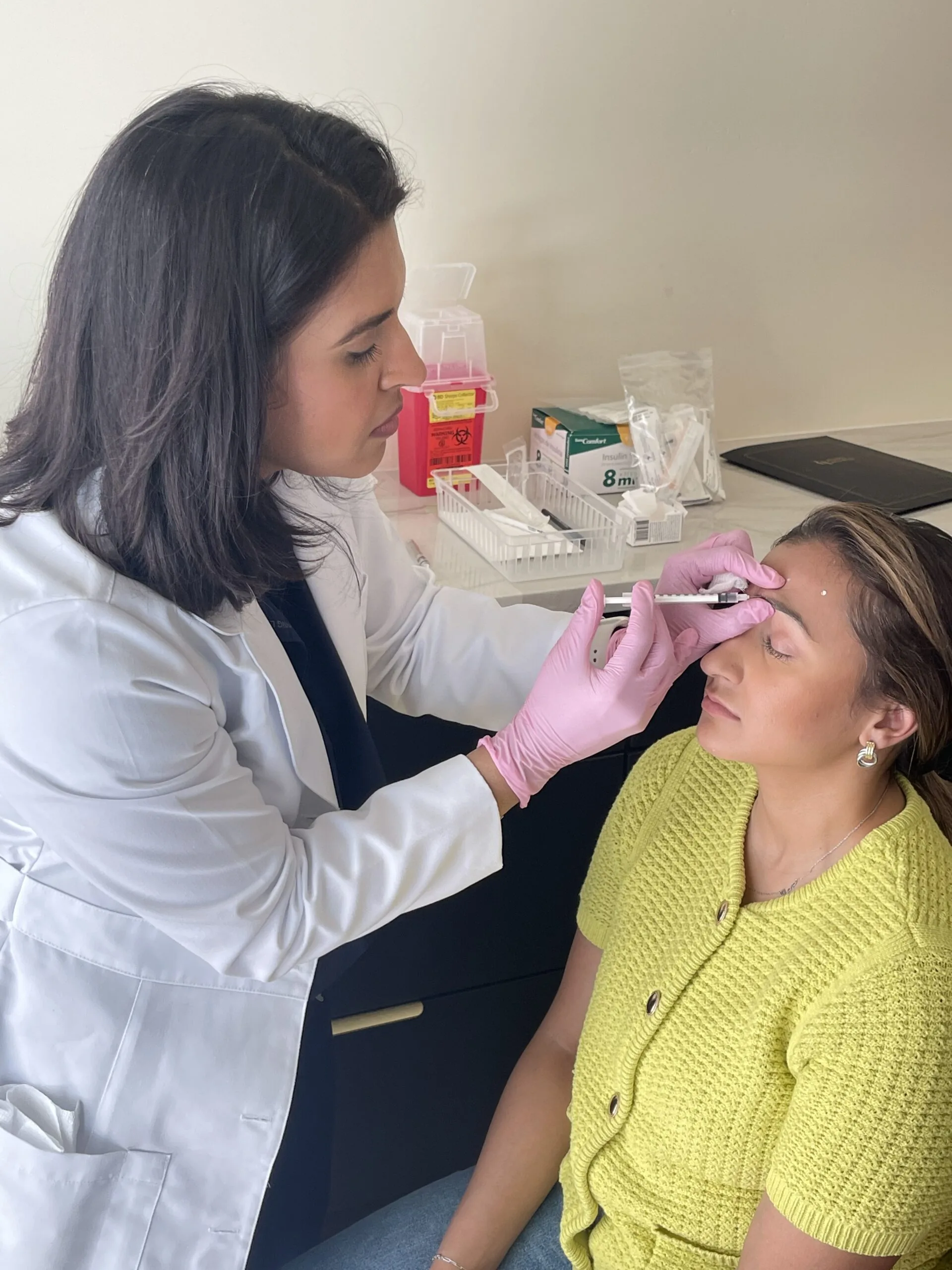
A good Botox result starts before the first injection, with the right questions. These are the ones worth asking yourself and your provider at a consultation, with the answers you should expect to hear.
Am I a good candidate for Botox?
Age, skin condition and muscle activity
There is no perfect age to start Botox. Some people begin in their mid-to-late 20s or early 30s, while others wait until lines are more established. Muscle activity, and how your skin responds to movement, matters more than age.
If strong, repeated expressions are already creating lines on your forehead, between your eyebrows or around your eyes, Botox may help. Skin elasticity plays a part too. Botox relaxes muscles but does not tighten loose skin, so it helps to know what it can and cannot do.
Preventative or corrective Botox
Botox can be used in two ways. Preventative Botox relaxes muscles before lines become deeply etched, slowing the development of wrinkles over time. Corrective Botox softens existing lines caused by repeated movement. Our post on preventative Botox explains when people usually start.
Medical conditions and medications
Botox is not right for everyone. Certain neurological or muscle disorders, pregnancy, breastfeeding and some medications (such as muscle relaxants or blood thinners) can affect whether it is safe or appropriate for you. Tell your provider about every condition and medication.
Your expectations
Ask yourself what you expect Botox to do. It can soften wrinkles, reduce lines caused by muscle movement and give a refreshed look. It will not change your facial structure, remove every wrinkle or stop aging.
A good candidate understands that results are subtle, temporary and meant to enhance natural features rather than freeze them. Clear communication with your provider keeps the result in line with your goals.
Which areas do you recommend treating, and why?
How injectors assess movement and balance
Experienced injectors do not judge your face at rest alone. They watch how your muscles move when you smile, frown, raise your eyebrows and squint. Those movements show which muscles are overactive and which areas contribute most to your lines.
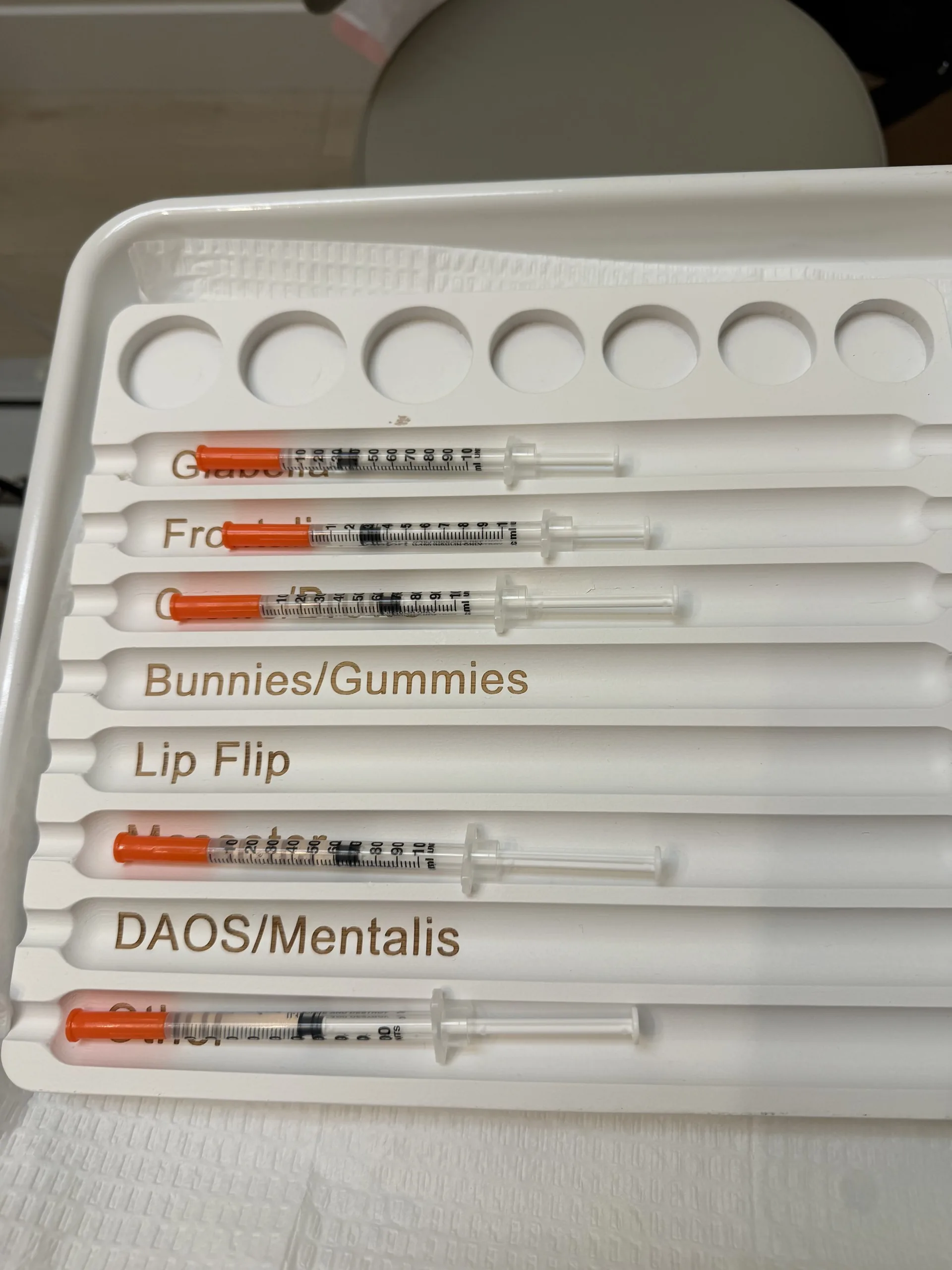
Balance is critical. Treating one area without considering the muscles around it can give an uneven or unnatural look. A skilled provider looks at the whole face, so Botox improves symmetry while keeping natural expression.
What you ask for and what your provider recommends
Many patients ask for a specific area, often based on what they notice in the mirror or have seen online. Your input matters, but recommendations are based on anatomy, muscle strength and how treating one area may affect another.
For example, you might ask only for forehead lines, and your provider may explain that treating the muscles between the eyebrows first could give a better overall result. The aim is not to override your preferences but to guide you toward results that look natural and age well.
Where first-timers usually start
For a first treatment, less is often more. Providers usually start with the areas with the strongest muscle activity, or those that most contribute to a tired look: often the frown lines between the eyebrows, the forehead or the crow's feet, depending on how your face moves.
Starting conservatively lets you see how your face responds before adding areas. It lowers the risk of overtreatment and builds trust between you and your provider.
How a conservative plan works
A conservative plan aims for subtle improvement rather than dramatic change: lower doses, careful placement and gradual adjustment over time. More Botox can always be added later, but it cannot be undone once injected. This approach suits first-time patients and anyone who wants to keep natural expression.
How many units will I need?
Why the number varies
Two people treating the same area can need very different amounts. Genetics, muscle activity, sex and even lifestyle affect dosing. Someone with stronger, more active muscles may need more units, and someone with finer movement may need fewer for the same effect.
That is why reputable providers avoid flat-price promises without an assessment. Proper dosing starts with an in-person evaluation, not a preset number.
Typical ranges
Providers often refer to general ranges at a consultation. The frown lines between the eyebrows usually need more units than crow's feet, for example, while forehead dosing depends on muscle strength and where your brows naturally sit. These ranges are starting points, not guarantees. A skilled injector adjusts the dose to avoid heaviness, drooping or an overtreated look.
How anatomy affects dosing
Thicker muscles, stronger expressions or a more prominent brow may need more units. Smaller or more delicate features often need less to keep balance and expression. Muscle strength is rarely identical on both sides of the face, so experienced injectors assess each side and make small adjustments for a natural result.
How units affect cost
Botox is usually priced per unit, so your total depends on how many units you need. Fewer units than necessary can lead to underwhelming or short-lived results. Our guide to Botox cost in Roseville explains the other factors.
What results can I realistically expect?
When results appear
Botox does not work instantly. Most people notice changes within 3 to 5 days, with full results around 10 to 14 days after treatment, as the targeted muscles gradually relax and the skin above them smooths out.
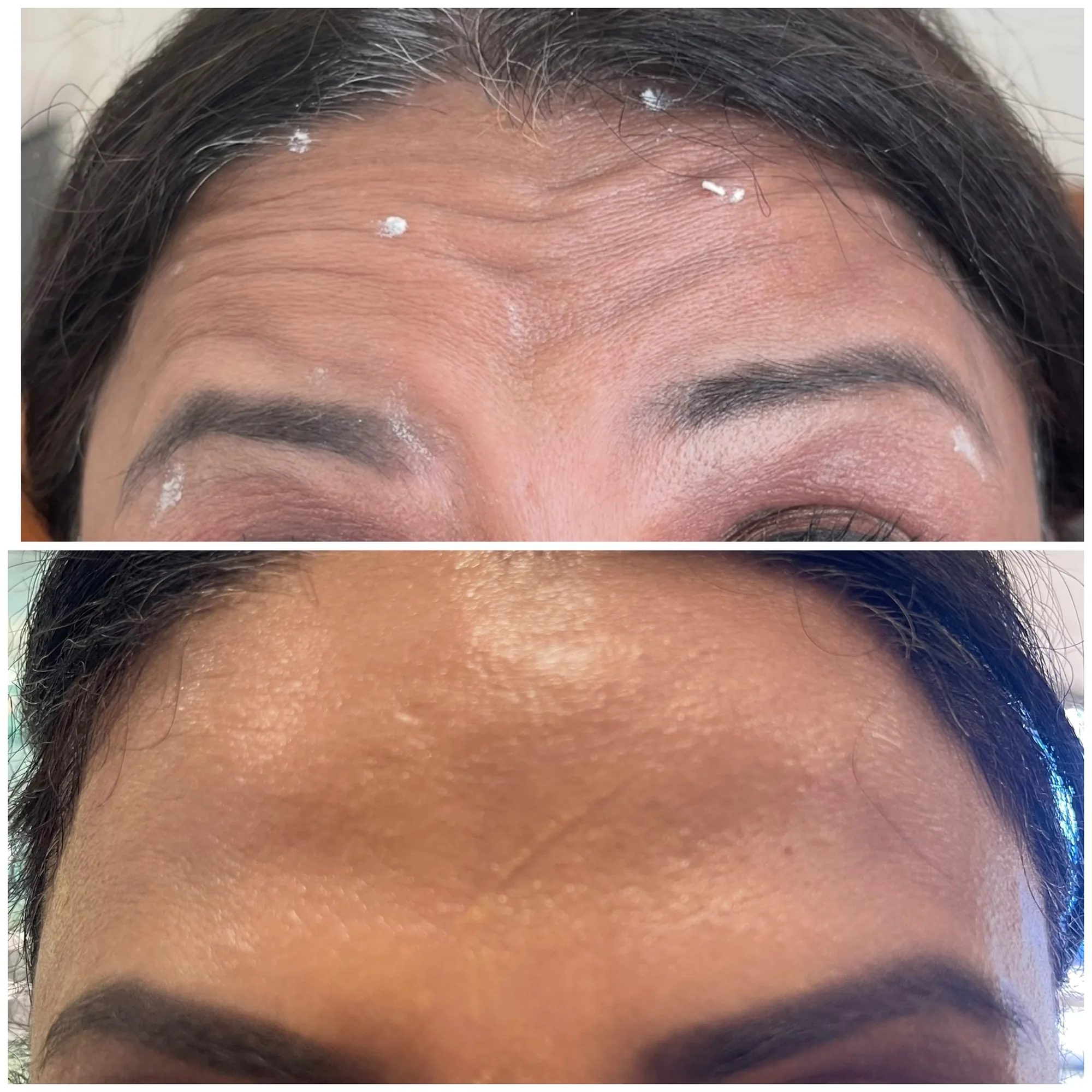
It is normal for one side to respond slightly faster at first. Any fine adjustments are usually assessed at a follow-up once the Botox has fully settled.
Subtle or dramatic
Botox is meant to soften movement, not remove expression. A subtle result looks refreshed and well rested while your face still moves naturally. Dramatic results usually come from higher doses or more areas and are not right for every face. For first-time patients, subtle is usually the goal.
What good Botox looks like
When Botox is done well, people should not be able to tell. They notice only that you look more relaxed. Lines caused by movement look softer, not erased, and your face still moves naturally when you talk or react. A well-done treatment keeps your face balanced and avoids heaviness in the brow or eyelids.
Agreeing on goals
You and your provider need to agree on the goal, whether that is preventing lines, softening existing wrinkles or keeping a very natural look. When expectations are not discussed openly, a result can feel disappointing even if the treatment went well technically.
How long will Botox last?
Average duration
For most people, results last about three to four months. As the product wears off, movement slowly returns and lines may reappear. First-time patients may find their results wear off a little sooner, while regular treatment can sometimes extend how long each one lasts.
What affects how long it lasts
A faster metabolism can break down the product more quickly. Frequent intense exercise may also shorten results. Dose and muscle strength matter: strong muscles may need more units for longer relaxation, and conservative doses may wear off sooner. Stress and very frequent expressions can play a part too. See how long Botox lasts for more.
How often to schedule maintenance
Most providers recommend treatment every three to four months for consistent results. Regular treatment helps stop lines from fully returning and may reduce the number of units you need over time. Spacing treatments further apart is not harmful, but letting Botox wear off completely each time can mean starting over rather than building on your result.
What happens if you stop
If you stop Botox, your face does not get worse or age faster. Your muscles return to their normal activity and lines gradually reappear as they would have. Stopping does not cause a rebound effect or any permanent change.
What are the risks and side effects?
Common, temporary side effects
Most side effects are minor and settle on their own within a few days: slight redness, swelling or tenderness where the needle went in, and sometimes mild bruising, especially if you bruise easily or take blood-thinning medication. A headache or a feeling of tightness in the treated area can also occur shortly after treatment.
Rare complications
Less commonly, Botox can cause temporary eyelid or brow drooping, uneven results or weakness beyond the intended area. These usually come from the product spreading or from poor placement, and they are not permanent. Severe reactions are very rare when Botox is used correctly, which is why careful screening, dosing and technique matter.
How experienced injectors reduce the risk
Choosing an experienced injector lowers the risk of complications. Skilled providers understand facial anatomy and how muscles interact, tailor the dose to your face, and avoid areas that could affect eyelid or brow position. A thorough consultation, conservative dosing and careful placement all make the result safer and more predictable.
What to do if side effects occur
If you notice anything unexpected or worrying, contact your provider promptly. Most issues can be assessed and managed with simple follow-up care. Avoid rubbing or massaging the treated areas right after injections, as that can increase the risk of the product spreading.
Questions first-timers ask
Will Botox make my face look frozen?
Done correctly, no. The goal is to soften excess muscle movement while keeping natural expression. A frozen look usually comes from overtreatment or poor dosing, not from Botox itself.
Will people be able to tell I had Botox?
Most people will not know. They may simply notice that you look more refreshed or rested. Botox does not change your facial structure.
Does Botox hurt?
Botox injections are generally well tolerated. Most people describe a quick pinch or light pressure that lasts a few seconds. The needles are very fine and the session is short.
When can I return to work or normal activities?
Most people go back to work and normal activities straight away. There is no required downtime. Mild redness or small marks where the needle went in may be visible for a short time and usually fade quickly.
If you are ready to talk through your own answers, read more on our Botox and skin rejuvenation page or book an appointment.